
'Tinkering will not do. Merely staggering spectrum dues comes nowhere near solving the problem,' cautions Rahul Khullar.

Telecom regulator Trai on Monday announced reduction in the national mobile phone roaming charges, but said there will be no free national roaming as of now.
.jpg)
According to the regulator, a large number of complaints relate to calls or messages received by consumers on behalf of banks, insurance companies and builders.

No one expects the government to publicly concede policy mistakes. But it can shed denial; and, stop the point-winning debating style to the formulation of public policy, says Rahul Khullar.

We should brace ourselves for more bad news in the coming quarters -- on economic output and growth, strains on the fiscal deficit, export slowdown, small and micro enterprises in distress, and further accumulation of NPAs in the banking sector, says Rahul Khullar.

It is domestic policy distortions and inaction to correct them that lie behind the large CADs.

Over 20 years, connectivity has massively expanded. But 50,000 villages have been left behind.

The mesmerizing march included elite marching contingents, missiles, warplanes, surveillance gadgets and lethal weapon systems, with French President Emmanuel Macron gracing the occasion as the chief guest.

Make in India right now is just a slogan. The policy content is missing or not clearly articulated. The lion with cogs and wheels must now show some majestic movement forward, says Rahul Khullar.

India must streamline reforms, only then it will see success.

Vagela could not have reached this position if Narendra Modi, who'd known him from his chief minister days, had not backed the choice.

Political compulsions have led to a change of narrative. But, in the ministry of finance, senior management ought to be looking at more serious issues than 'digitally cashless' India, says Rahul Khullar.

India is ranked below Bhutan and Sri Lanka in terms of broadband penetration, says TRAI.

TRAI seeks views to regulate net-based calling, messaging apps

That may have reduced clutter, but it would also have reduced choice.

Apart from other things, this would have put a spanner in the government's Digital India campaign.
.jpg)
Instead of tinkering with roaming, the circle system should be ended.

Rahul Khullar, Trai chairman beleives politicians and corporates who own media houses should give freedom to editors.

At Rs 2,685 crore for 1MHz pan-Indian spectrum, reserve price would be 52% higher than that of 1,800MHz band
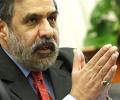
In a meeting with the commerce minister, India Inc hammered Sharma on the collapse of investments, structural nature of the current account deficit and stagnant growth in agriculture.
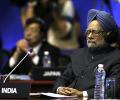
Industry is displeased over the failure of the National Manufacturing Policy, which has failed to invite any sizeable investment since it was launched more than two years ago.

Strategic sales are tricky and were last undertaken when the Vajpayee government was in power.

Telecom companies put in bids worth a total of about Rs 45,000 crore (Rs 450 billion) on the second day of the auction on Tuesday, with premium 900 Mhz band in Delhi, Mumbai and Kolkata witnessing continuing demand.

Rationalisation of reserve prices in the ongoing spectrum auction helped the government to get Rs 40,000 crore of bids on the opening day.

With the Telecom Regulatory Authority of India (Trai) refusing to reserve 900-MHz spectrum for incumbent telcos, asking them to vacate the quantity held and win back through bidding, GSM operators, led by the Cellular Operators Association of India (COAI), have decided to propose a compromise formula.
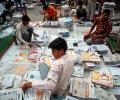
On this technological revolution, we are 7-10 years behind the US. So, the threat to newspapers doesn't exist now, says Trai Chairman Rahul Khullar.
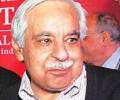
Within a week of the Telecom Regulatory Authority of India giving its final recommendations on the valuation and pricing of spectrum, Chairman Rahul Khullar speaks to Business Standard on the process the regulator followed in finalising the much-debated issue.

Well then, what did DeMo achieve? As predicted by most economists, the volume of transactions fell, economic activity was adversely impacted, and some sectors (which were more dependent on cash transactions) witnessed greater disruption than others, says Rahul Khullar.
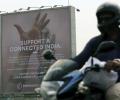
Its pre-consultation paper has been silent on the issue of closed electronic communication network, a loophole telcos can exploit to offer discriminatory pricing.

The government chose moral persuasion to make people give up subsidies, notes Rahul Khullar.

The savings would be better spent and might actually reach the poor, says Rahul Khullar.
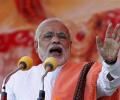
Most top industrialists rate PM's first 100 days in office as 'good', primarily due to his intentions, not concrete policy measures.

Rajeev Chandrasekhar discusses five issues pivotal for the success of Digital India
